The first weekend of December 2025 gave us the perfect excuse to escape the city and reconnect with nature. From 5th to 7th December, we spent two unforgettable nights at Mvuu Lodge, one of the Lower Zambezi’s most beloved riverfront properties. Although the lodge itself was closed for the rainy season—when the roads become too muddy and difficult to access—we stayed at the campsite, which remains open year-round; depending on how the roads are. We weren’t alone; another family of three was also enjoying the wild, green beauty of early rains along the river.
About Mvuu Lodge
Mvuu Lodge is located along the banks of the majestic Zambezi River, a short distance outside the Lower Zambezi National Park boundary. It is known for its warm hospitality, relaxed atmosphere, and excellent proximity to wildlife. While not a luxury lodge, Mvuu offers comfortable, well-maintained chalets, riverside tents, and a peaceful campsite shaded by towering trees. Guests often praise the friendly staff, good food, and the feeling of being close to nature without losing basic comforts. Many reviews highlight its excellent value for money, beautiful river views, and convenient access to activities like game drives, boat cruises, and fishing.
A Weekend Surrounded by Wildlife
Even before reaching the lodge, the Lower Zambezi was already putting on a show. As we drove toward Mvuu, we came across several elephants on the road—my first time witnessing such a moment outside a designated park. We had to stop and wait as a family of elephants slowly crossed right in front of us. It was an unforgettable welcome to the valley.
Our campsite experience was equally magical—and thrilling. At night, the bush came alive. We fell asleep to the sound of lions roaring and hyenas calling in the distance, though at times it felt as if they were uncomfortably close to camp. That deep, resonant roar vibrating through the darkness is something you never forget. It made the night feel wild, alive, and beautifully unpredictable.
The setting itself was spectacular. From our campsite on the Zambian side of the river, we could see across to Zimbabwe’s Mana Pools National Park, its untouched wilderness stretching out on the opposite bank. Watching the sun rise over Mana Pools while standing on Zambian soil felt surreal—two iconic national parks divided only by the flowing Zambezi.
Another magical moment came when hundreds of fireflies lit up the darkness around us, blinking between branches like tiny floating stars. I had never seen fireflies before, and watching them dance across the riverbank felt surreal and almost cinematic.
Half-Day Game Drive in Lower Zambezi National Park
Our main activity was a half-day game drive inside Lower Zambezi National Park. The adventure started at 05:30, when a boat picked us up from our lodge for a 30-minute sunrise ride along the Zambezi River. We reached the park gate as the sky turned golden, setting the perfect mood for a morning in the wild.
Because of the rainy season, the park transforms into a lush green paradise, and as our guide said, the ground becomes a “green carpet”. While this beauty is breathtaking, it also means wildlife disperses deeper into the bush—there’s abundant food everywhere, so animals don’t need to gather around waterholes. This explains why rainy-season game drives are generally quieter for big cats.
We didn’t see lions or leopards, but we had plenty of incredible sightings: elephants feeding in the grasslands, playful baboons grooming each other, hippos in the water, herds of impalas and waterbucks moving gracefully across the plains.
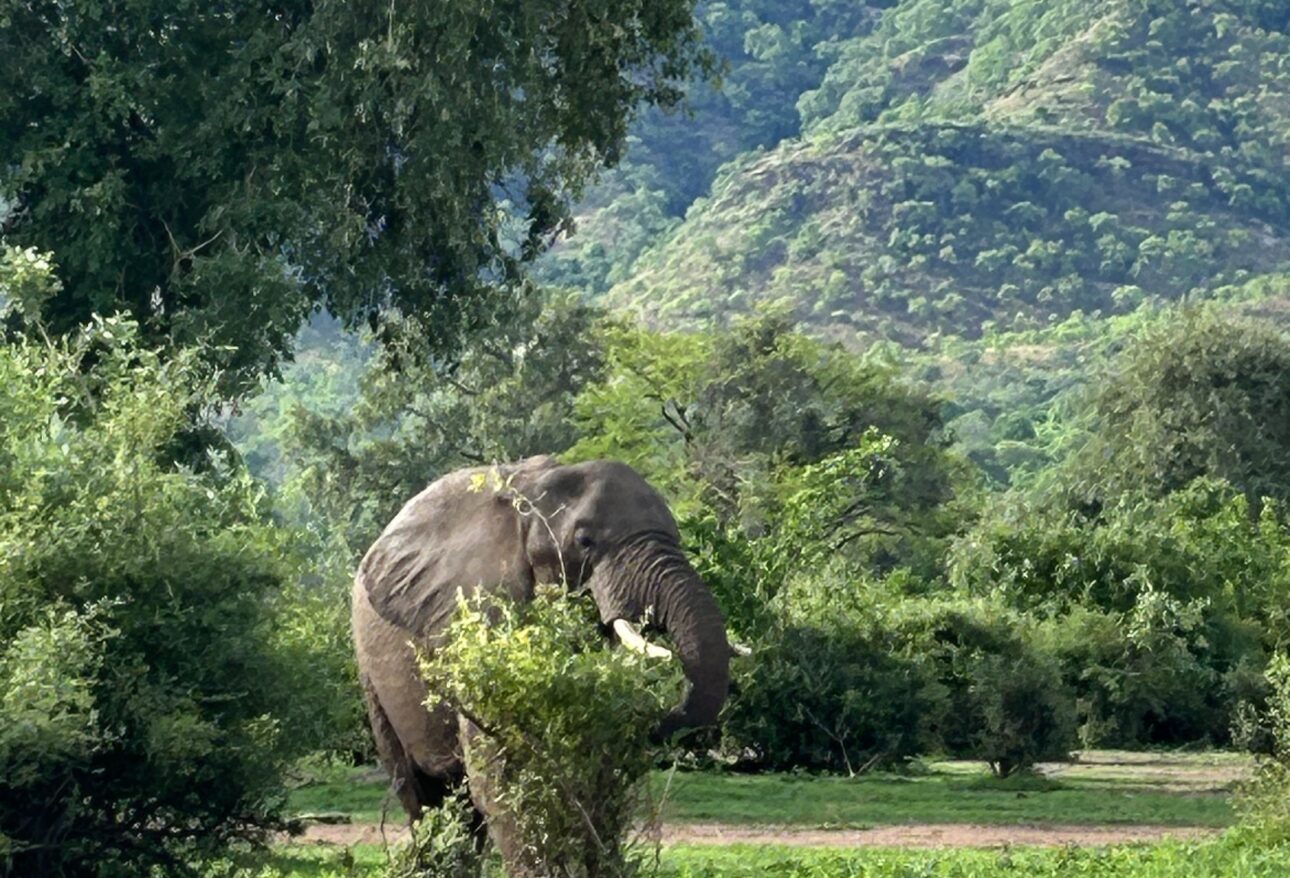
I witnessed something I’d never seen in all my previous safaris: an elephant feeding on fresh grass using only its trunk. I’m used to seeing them reach for high branches, but the lush greenery of the rainy season meant food was everywhere, and this gentle giant skillfully picked up grass and placed it into its mouth. A small moment — but one that stays with you.
Our group included two passionate bird photographers, and they were in heaven. Our guide, John, patiently stopped the vehicle for every interesting sighting, allowing them to photograph:
- – Multiple species of bee-eaters
- – Elegant egrets
- – Glossy starlings
- – Several types of hornbills
- – Majestic eagles
The rainy season is a fantastic time for birdwatching, and the forest was alive with colour and birdsong.
Why Visit Lower Zambezi in the Rainy Season?
Although most travelers choose the dry season for its concentration of wildlife, the rainy season has its own charm:
- The landscape is lush, green, and vibrant
- Fewer vehicles = quieter, more exclusive experiences
- Amazing birdwatching opportunities
- Beautiful weather for photography
- Unique sightings not common in peak season
It’s a different kind of safari—slower, softer, and full of surprises.
Final Thoughts
As our weekend in the Lower Zambezi came to an end, I realised just how deeply this place touches you. It’s not just the wildlife or the landscapes — it’s the quiet moments that stay with you long after you’ve left. The hush of the river at dawn… the soft glow of fireflies circling our campsite… the gentle rumble of elephants grazing nearby… all of it felt like a reminder of how raw, pure, and beautiful the world can still be.
There was something almost healing about being surrounded by so much life. Watching elephants cross the road in front of us, seeing a lone giant picking grass with such care, sharing unfiltered laughter with friends — these are experiences that settle into your heart.
Lower Zambezi in the rainy season isn’t about ticking off sightings; it’s about feeling the soul of the valley. It’s slower, softer, and incredibly alive. And as we drove away on our last day, I knew this wouldn’t be my last trip — because some places don’t just impress you; they pull you back.