
A wild weekend in Zambia’s hidden forest sanctuary
When October draws to an end in Zambia, something magical stirs deep within Kasanka National Park. Millions of fruit bats—one of Africa’s largest mammal migration—descend upon the mushitu forest, transforming the sky into a living, fluttering sea of wings. Last weekend of October 2025, I finally experienced this natural wonder for myself, and it was nothing short of life-altering.
The Journey to Kasanka
We set out from Lusaka early in the morning for a long, 10-hour self-drive to the park. The heat was intense, and by the time we reached Kasanka’s main gate, we were tired yet filled with anticipation. From the entrance to the reception alone, it’s another 15-minute drive through wilderness with almost no signage—at some point, we were convinced we’d lost our way. My advice: always arrive before sunset. Once darkness falls, there are no lights or signposts to guide you.
We camped at the Pontoon Campsite for three nights, a peaceful spot surrounded by trees and alive with the sounds of the forest. With no electricity and barely any phone network, it was a total cut-off from modern life—a refreshing kind of silence that forces you to be present. Evenings meant campfires under starry skies, listening to nocturnal calls echoing through the park.
The Bat Spectacle
When we arrived, it was almost time for the evening bat flight, so we hurried straight to the public viewing area. Finding it wasn’t easy—again, no signage—but the moment we arrived, everything else faded away. On that first evening, we were sitting on benches, facing the wrong direction, when a distant rustling sound grew louder and louder. Suddenly, thousands of bats filled the sky above us, dark silhouettes sweeping across the fading light. It was breathtaking.
For the next two evenings, we visited private viewing decks with a guide and scout—an option I’d highly recommend despite the extra cost. Being so close to the colony, we could feel the rush of air as the bats flew overhead, hear their wings, and smell the fruit-laden forest. The experience was humbling, a vivid reminder of how small we are in the grand design of nature.
Exploring the Wild Around Us
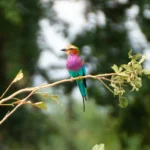
During the day, we explored on foot around our campsite, enjoying quiet nature walks and a bit of birdwatching with friends. My husband and our friend Rutger, who are passionate about bird photography, were in their element. Kasanka may not be packed with big game, but it’s rich in smaller wonders—sitatunga antelopes grazing near the swamp, puku wandering gracefully, and even the occasional rhino sighting.
Evenings in the Wild
Our nights were simple but unforgettable. With no electricity, the only light came from the fire that was built by Wisdom and Jonathan each evening. We cooked, laughed, and talked under a sky crowded with stars, with the sounds of frogs, insects, and distant animals creating a rhythm that felt ancient and grounding.
Reflections and Tips for Future Travelers
Kasanka was more than just a trip—it was a reconnection with the raw pulse of nature. Watching millions of bats rise in unison from the trees each dusk was pure awe. Living without network coverage, away from all distractions, reminded us of what real connection feels like—talking, sharing, listening, being.
Still, there are things I’d improve, especially the signage inside the park, which makes navigation difficult. But that minor challenge pales compared to the beauty and serenity Kasanka offers.
If you plan to go, here are a few things I learned:
- Pack insect repellent. The tsetse flies are relentless and their bites can be painful.
- Carry plenty of drinking water. The campsite water isn’t potable.
- Wear proper shoes. The terrain is uneven and dusty.
- Book a guide for the bat experience—they’re knowledgeable and make a huge difference.
- Skip the game drives. There isn’t much big game to see, but the migration alone is worth the journey.
- Best time to visit: late October to early December, when the bat migration peaks.
Kasanka National Park may not boast lions or elephants in abundance, but during the bat migration, it becomes one of the most magical places in Zambia. Standing beneath that swirling cloud of wings, I felt both tiny and infinite—a fleeting visitor in a timeless cycle that continues year after year.
You can watch our Kasanka trip short videos on YouTube: https://www.youtube.com/watch?v=qPzg2zjFmao & https://www.youtube.com/watch?v=1JIn8o9OrtE
Note: This article reflects my personal experience and opinions from my visit to Kasanka National Park. Your experience may vary depending on season and travel arrangements.